Ten Virtues of a Positive Safety Culture
Alessandro Baseggio
Visite: 359

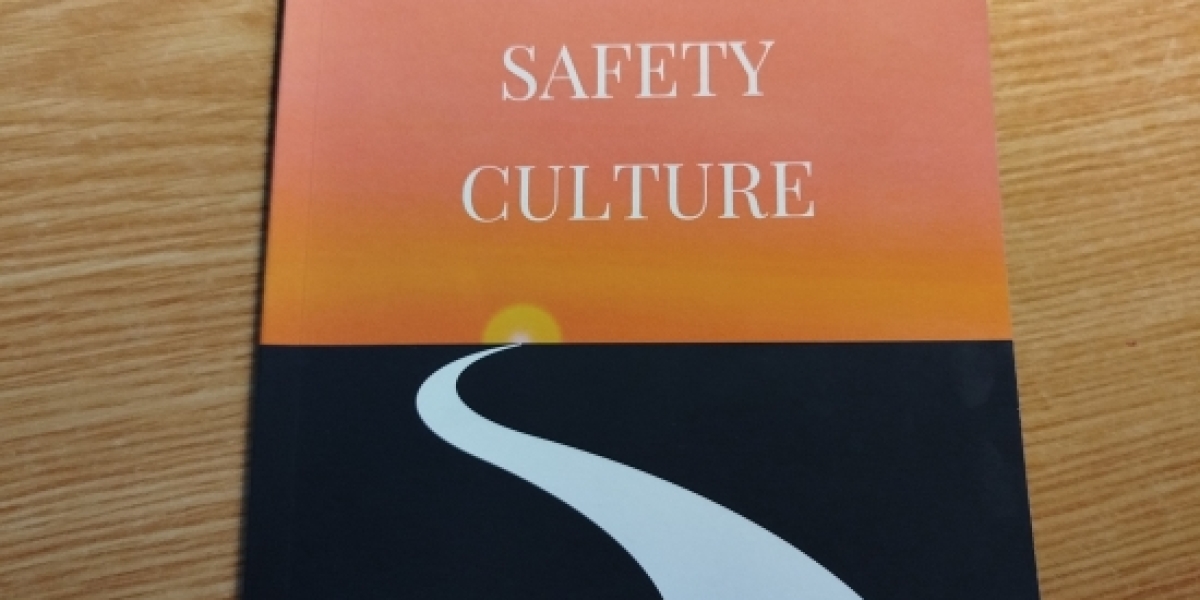
I just finished reading “Ten Virtues of a Positive Safety Culture”, the latest published book (to date) by Sidney Dekker.
I had it on my wish list for a while, but after listening to Georgina Poole 's podcast interview with the author, I decided to buy it right away.
And I say it was really worth it. A quick read, an uncommon feature of Sidney's books, it describes in an unusual way the pillars of Safety Differently, the modern approach to safety that Sidney has developed and implemented over time.
The book is suitable for the curious, still immature in this paradigm shift, as well as for the more experienced in the field.
For new readers, the book provides insights into the change introduced without going into too much technical detail. By challenging their own beliefs, they can begin to look at the work in a different way, creating the healthy curiosity that will later lead them to read a few more books.
Those, on the other hand, who are seasoned, who have perhaps already read other classic books such as “The Field Guide to Understanding Human Error, ‘ ’The Safety Anarchist, ‘ ’Do Safety Differntly, ‘ or ’Foundations of Safety Science” will find a new level of reading to the subject.
Here Sidney goes over the pillars of modern safety science (human error as a starting point, safety as the ability to make things go well, restorative approach, etc.), but through the 10 virtues a good leader should possess to think about safety in a positive way.
Going through empathy, patience, kindness, simplicity, trust, wisdom, responsibility, honesty, and boldness he describes how these virtues contribute to building a positive safety culture, in full harmony with the principles of the Safety Differently vision.
The treatise considers the various theories that have characterized safety science over the past century, contextualizing them to the historical moment, without going into too much technical detail, as is done in “Foundations of Safety Science”.
The discussion is not intended to bring out a method that, like a magic wand, is able to erase the past to solve all problems. Rather, it represents a journey through abstract concepts connected by the 10 virtues. I know, for engineers like me, this might seem pointless and meaningless, but it is not.
It also does not provide models or metrics to measure behavior since virtues cannot be measured. How could you quantify kindness? Or patience?
This absence of numerical indicators brings to mind another text (already on my list of must-read books) by Carsten Busch “If you can't measure it... Maybe youshouldn't ”.
Last curiosity: in the foreword Sidney points out that the book was inspired by lectures given during 2024, including our October Masterclass in Venice. I feel honored to have contributed in part to this very interesting and introspective book.
